
Written by the WildScape Azores Tours team — local guides and naturalists born and raised in São Miguel, Azores.
Last updated: May 2026
São Miguel doesn’t ease you in gently. The moment you step off the plane and drive your first winding road through green valleys dropping into the sea, you understand — this island was made for exploring on foot.
We’ve been guiding visitors through these trails for years at WildScape Azores Tours, and the question we hear most often is always some version of: “Where should I actually hike?” Not the tourist-brochure version. The real answer.
So here it is. A local’s honest guide to the best hiking trails in São Miguel — what they’re really like, who they’re right for and a few things nobody else will let you know.
Before You Lace Up: What Hiking in São Miguel Is Really Like
São Miguel has over 32 official hiking trails. Most visitors only ever see one or two viewpoints from a car window. That’s a shame, because the island reveals itself completely differently on foot.
A few things to know before you go:
The Best Hiking Trails in São Miguel by Difficulty
Easy Trails — Perfect for First-Timers
1. Lagoa das Furnas Trail (PRC06 SMI)
Distance: 9.4km circular | Time: ~3 hours | Difficulty: Easy
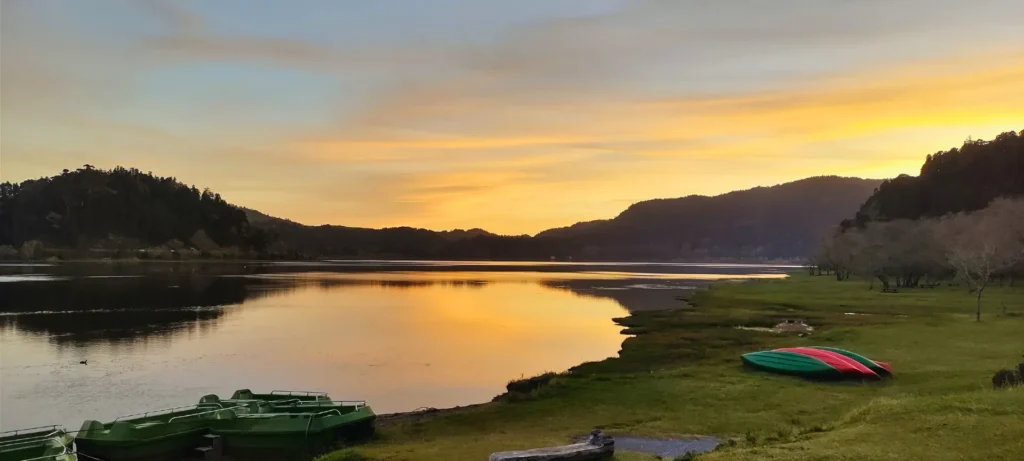
If you only hike one trail in São Miguel, let it be this one. You start at the fumarolic field of Furnas Lagoon, where steam rises from the earth and where the popular Cozido das Furnas cooks underground using geothermal heat. It feels otherworldly — because it genuinely is.
The trail circles the lake through lush woods, past a Treetop park (a good adventurous activity), with different openings to the lagoon, each one with a different perspective. Keep your eyes on the treetops: this area sits within the priolo habitat, and you may spot the rare Azorean Bullfinch if you move quietly.
You might also find other different kinds of native and migratory birds along the way, even some wild poultry, but all wildlife found inland in the Azores are non-predatory, one less thing to worry about!
I as a local, usually skip the route that goes far from the lagoon, I usually park in one of the two parking lots around the lagoon and drive to the village once I’m ready for a meal or to enjoy the hot springs relaxation.
A Shrine of Knowledge Cultivation
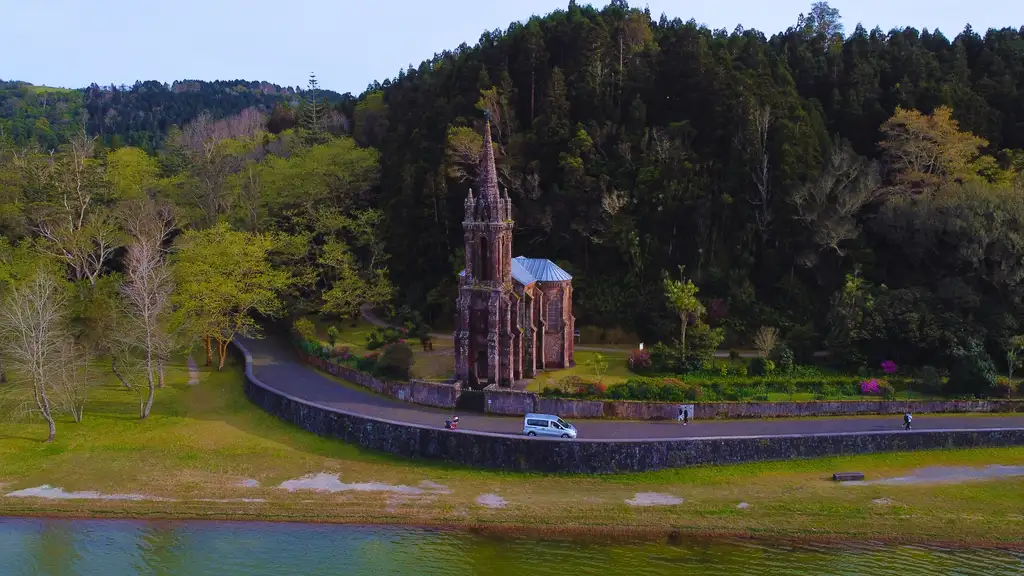
Don’t miss: The view across the lake to the Chapel of Our Lady of Victories — especially in the morning mist. A chapel built in the XIX century as a private mausoleum for the Canto family. Next to the building you’ll also find the Mata José do Canto botanical garden.
Further ahead you will find the Furnas Environmental Interpretation Centre and the surrounding area with several leisure places, ruins of ancient ovens of coal production and the biggest classified norfolk island pine (Araucaria heterophylla) in Europe.
Local tip: Arrive by 6:30am to see the first Cozido pots being inserted to the holes. After 5-6 hours you can see the first batch of the day being removed. Then eat lunch in one of the different restaurants in Furnas village (we recommend the Vale das Furnas restaurant for a great selection of local ingredients cooked in a special manner, that removes the sulphur smell from the food. Perfect morning!
Extra local tip: The Grená Park stands right next to the fumarolic field of Furnas Lagoon, if you intend to spend the whole day in nature they have a varied selection of hiking trails inside their very lush nature park. You can even find hidden waterfalls at the end of some of them. The cherry on top? A soak in one of their nordic style jacuzzi’s, heatead with firewood from the land. (Tickets can be bought at the entrance)
2. Sanguinho & Salto do Prego (PRC09 SMI)
Distance: 4.6 km circular | Time: ~2 hours | Difficulty: Easy-Moderate
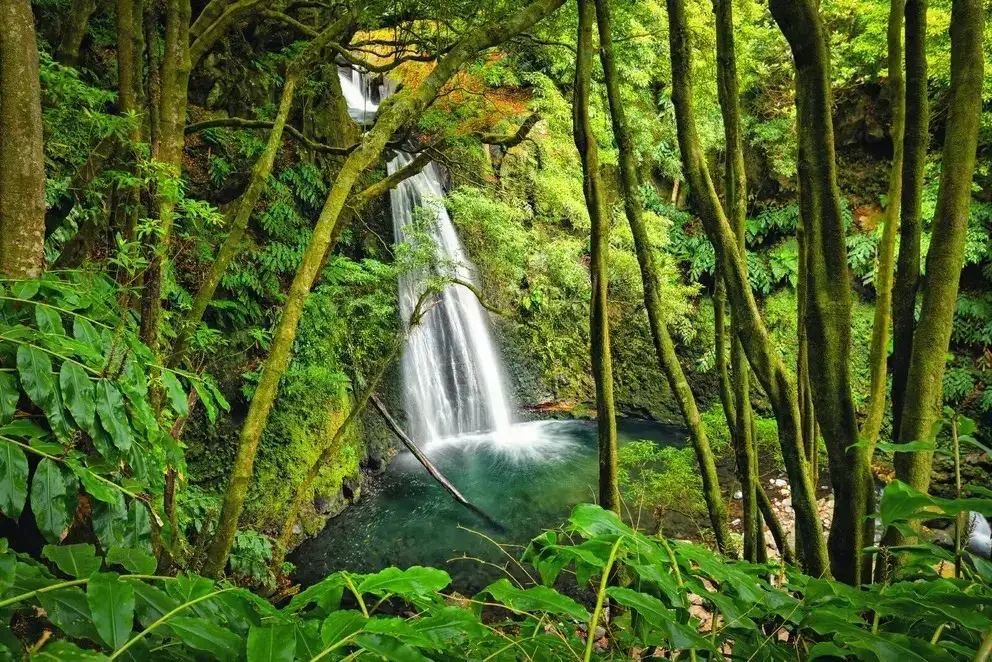
This trail has everything a first-time São Miguel hiker could want: lush woods, a stunning waterfall you can swim in and as a bonus, one of the most quiet places on the island: the village of Sanguinho.
Sanguinho was emptied when its residents left for mainland Portugal and the Americas throughout the mid 20th century. The old stone houses were slowly restored since the beginning of the 21st century and now serve has eco-tourism accommodations. Its isolated location on top of mountains overlooking the village of Faial da Terra, offer pure air and a quiet environment. Restricted access to vehicles, only the owners run a small transfer by 4×4 vehicle. It’s definetely worth a slow walk through before or after the waterfall.
Along the trail, the vegetation is thicker, with the Australian Cheesewood (Pittosporum undulatum) and the Australian Blackwood (Acacia melanoxylon) as predominant species.
Walk down the winding road in paving stone, very carefully due to its slippery ground and angle of inclination, until you reach the first fork of the trail, near the stream. Descend the main road until the initial panel, ending the trail.
The waterfall: Salto do Prego drops into a small natural pool perfect for a dip. Bring your swimsuit even in shoulder season, the water is cold but the reward is real.
Local tip: The trail starts near a bus stop in Faial da Terra, go up the asphalted road until the fork where you should continue straight by a dirt road, always along the left bank of the stream. Easiest way to get to Faial da Terra is driving yourself. It’s also accessible without a car if you arrange a taxi from Ponta Delgada or join a guided hike that offers transfers.
3. Lagoa do Canário + Grota do Inferno
Distance: 2.6 km linear | Time: <1 hour | Difficulty: Easy Peezy
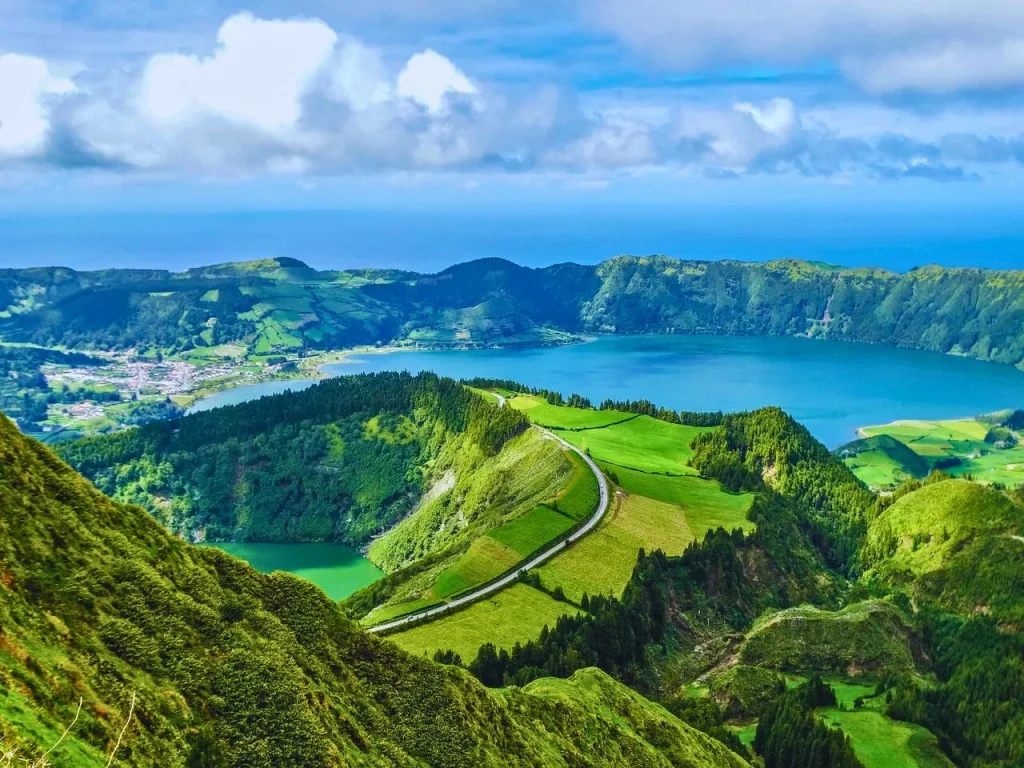
The easiest trail in Sete Cidades in my opinion, walking through the rich Cryptomeria forest around the Canário Lagoon throws you off your feet the moment you step in.
Start by parking at the parking lot by the Canário Lagoon (also the same for the Serra Devassa hike – hidden gem referral below) and head to one of the shores of this lagoon secluded entirely by japanase cypress trees. Inside this water body you’ll find some types of carps and trouts (introduced by humans).
Go back up to the park level and taking one path or another on bifurcation point you’ll walk among a rich environment of Cryptomeria japonica, Hedychium gardenarium and Sphaeropteris cooperi , besides the beautiful Rhododendron and Hydrangea macrophylla flowers. Even the steped path is composed of loose volcanic pyroclasts, more specifically, lapilli or bagacine stone.
The most Popular Trail in Social Media
After reaching the first viewpoint, views over the main crater of Sete Cidades caldera will stand out with the blue lagoon and the village inside the crater. The best views await you at the top. This will be the more difficult section of the hike, a short 5 minutes walk but steep, a one-sided railing can help the more phisically limited. At the top the prize will be well worth the walk, usually very busy during the day, so my recommendation will be arriving before 08:00am or after 06:00pm (if you’re lucky with the weather, the sunset opportunity is quite something).
From this side of the top of the crater, you’ll also spot the Santiago and Shallow lagoons right upfront, two secondary craters that surged after the formation of the primary crater.
Local tip: If you’re feeling adventurous, you can end the trail a different way, instead of returning through the steep path just take a right turn on your way back from the high viewpoint and follow the path. This way will give you different views of the southwestern coast of the island and of some its other volcanic domes. The path is a bit more uneven and narrow in some points, this will be the more wild option. Not recommended for not agile folks.
🌿 WildScape Azores note: Our West Coast Tour includes guided walk from Lagoa do Canário to Grota do Inferno viewpoint, explaining all the local flora and fauna found along the way. We’ll also point out some hidden gems along the way. Learn More Here
Moderate Trails — The Sweet Spot
4. Vista do Rei – Sete Cidades (PR03 SMI)
Distance: 7.5 km linear | Time: ~2 hours | Difficulty: Easy–Moderate
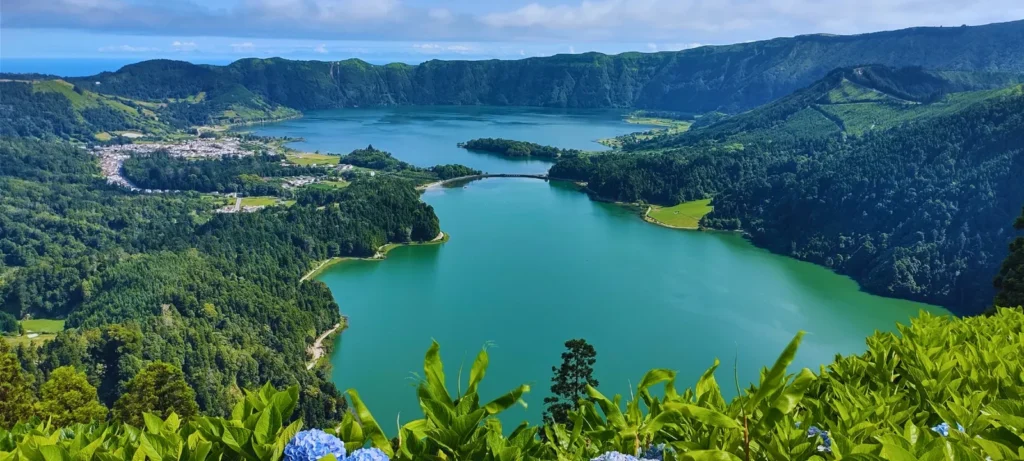
This is the one. The postcard hike of the Azores.
Start at Vista do Rei: the viewpoint with the legendary view of the two crater lakes, one blue, one green (although less noticeable nowadays) and walk the rim of the volcano’s caldera down into the village of Sete Cidades below. This descent gives you angles on the crater that no viewpoint or car drive can touch.
The trail follows the western ridge before dropping through farmland and cryptomeria forest. Along the way you’ll see the lakes from half a dozen different angles, each one better than the last, and contemplate the interior of the crater with its different volcanic formations.
Local tip: Reaching the aslphalt road and before heading down the village, turn left and visit the viewpoint of Lomba do Vasco with a view over the western coastline: focus on the village of Mosteiros and its small islets.
Distance reality check: This is a point-to-point, so you’ll need to arrange a return — taxi from the village, or have your accommodation/tour arrange pickup or transfer. You can always climb back up to the Vista do Rei viewpoint.
Extra local tip: The blue-green colour difference between the lakes is most vivid in morning sunlight and when they’re not very full (June-September). Don’t sleep in on this one!
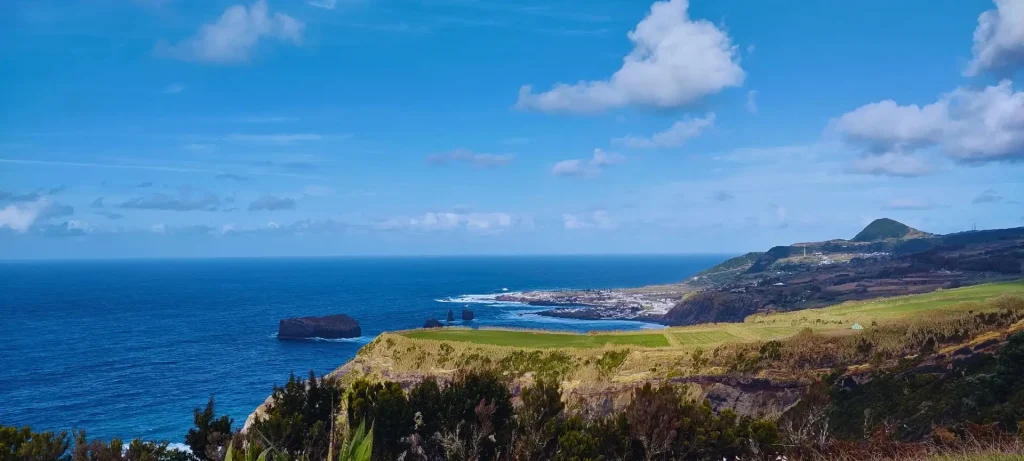
5. Praia to Lagoa do Fogo (PR02 SMI)
Distance: 11 km linear | Time: ~4.5 hours | Difficulty: Moderate
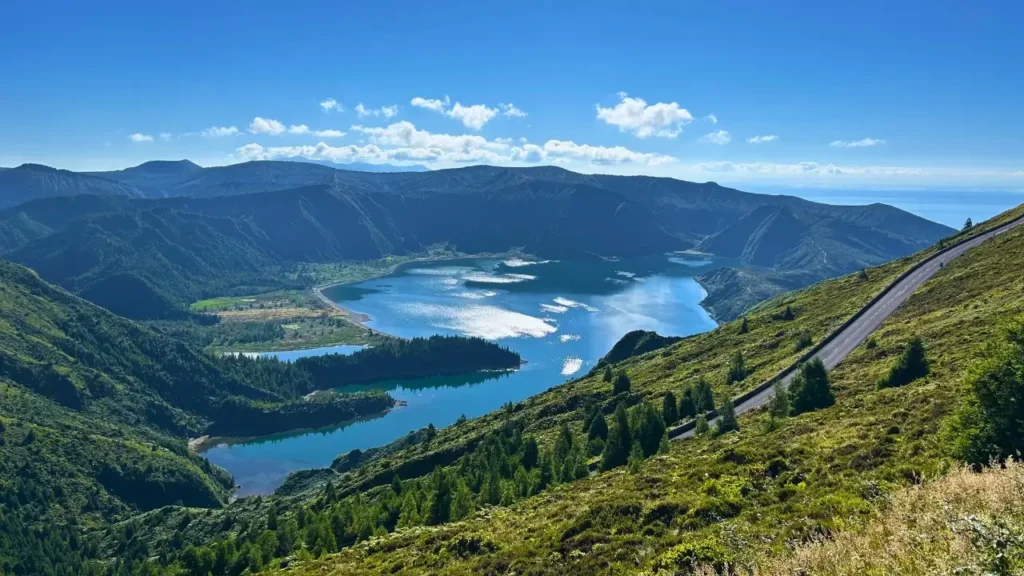
Lagoa do Fogo sits inside a protected nature reserve at the center of the island. Because access by private car is now restricted during summer season, mid June to the end of September (you must park your rental at the bottom and use the shuttle), the trail is the best way to arrive and the best way to earn the view.
This linear round trip to the banks of Lagoa do Fogo starts on a dirt road that leads to agricultural fields and pastures. While ascending, you will encounter the remnants of an old factory that manufactured fibers from a plant brought in, the New Zealand flax (Phormium tenax)
Local tip: Before the starting point of this trail you’ll also find a nearby waterfall pool, fit for a swim. The Cascata do Segredo, doesn’t hold many secret anymore but it’s still considered off the main routes.
You start at the coast in Praia and climb steadily through hydrangea-lined paths and native woodland before emerging at the lake — turquoise, wild and utterly unlike anywhere else on the island.
This is not a crowded trail. It’s somewhat demanding, which keeps the day-trippers away. You’ll likely have stretches of it entirely to yourself.
Elevation gain: ~520m. Wear proper footwear.
Local tip: Bring more water than you think you need. There are no cafes on this trail.
6. Rota da Água – Janela do Inferno (PRC37 SMI)
Distance: 7.6 km circular | Time: ~2.5 hours | Difficulty: Moderate
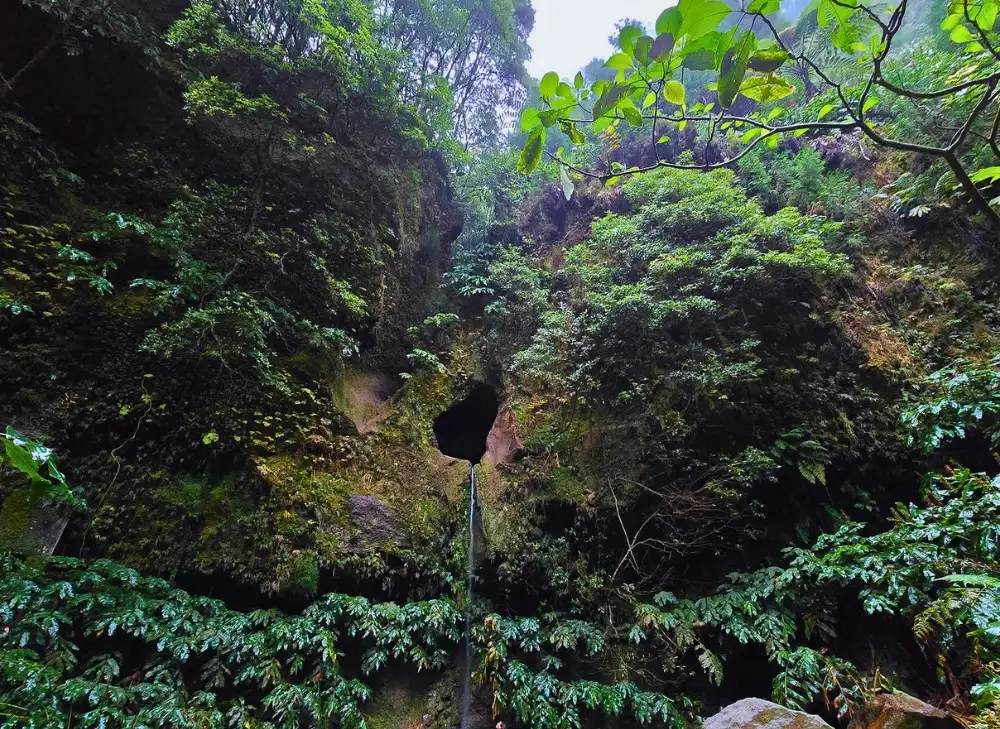
Tunnels. Aqueducts. A hidden waterfall through a hole in a vertical cliff. This trail has an adventure-story quality that makes it stand out from everything else on the island. This is our absolute favourite hiking experience for those who want a bit of everything.
The name means “Window to Hell” — the janela is a spring-fed waterfall trickling through a natural opening in a rock face. To reach it, you walk through two long tunnels (bring a headlamp or use your phone light) through dense, dripping forest.
Begin the walk near the Casa da Água – Trail Point. Normally the trail would send you down the road to the left, but we prefer to do this trail in a reverse way. Cross the road from the Casa da Água down to the small neighboring village of Remédios da Lagoa and keep an eye open to the mark on a right turn, follow the narrow path through the houses and you’ll eventually find a narrow path of a dirt road surrounded by vegetation – this is the way. Keep on climbing until you reach the road again, cross it and climb down through the farmers road. Keep an eye open for the parallel lines marks, these indicate the correct way, if you stumble a X-cross mark you’re on the wrong path, reverse a few steps and look for the correct way.
Specially Made For Summer
Local tip: Do this one on a hot sunny day, the shade inside the trail and the cool water at the end make it a perfect choice.
There’s a low ceiling in one of the tunnels. People taller than 185cm should be warned to crouch. Feels a bit creepy but an unique experience regardless.
When you reach the wooden staircase bridge you’re already at 2/3 of the way, cross through the pastures following the marks and you’ll eventually reach back the secondary dirt roads.
Local tip: By the parking lot you’ll find one or two food trucks that are usually open from morning up until late afternoon. A great spot for a refreshing beverage or a juicy burger.
🌿 WildScape Azores note: Our Majestic North Tour crosses by this hike, we can include this trail with an expert guide in a private tour fashion, reach out and let us know you’re interested. We’ll take care of the rest. Reach Out Here
Harder Trails — For Those Who Want to Earn It
7. Caldeiras da Ribeira Grande – Salto do Cabrito (PRC29 SMI)
Distance: 8.6km circular | Time: ~3 hours | Difficulty: Moderate–Hard
A trail for people who like variety. You’ll pass geothermal hot springs, follow a river canyon, climb metal staircases bolted to a cliff face, and arrive at the base of Salto do Cabrito waterfall — one of the most dramatic on the island.
It’s shorter than most hard hikes, but the terrain is genuinely challenging in places. The suspension bridge section near the end adds a shot of adrenaline.
Trailhead: Near the Caldeiras da Ribeira Grande hot springs on the north coast.
8. Pico da Vara (PRC07 SMI)
Distance: 7.5 km linear | Time: ~3.5 hours | Difficulty: Hard
Permit required — book in advance!
This is the highest point on São Miguel at 1,105m. The ascent goes through the Tronqueira Forest, a protected conservation area and one of the last refuges of the endangered Azores Bullfinch (Priolo). If you want to see this bird — and as an eco-traveller you absolutely should — this is your best chance.
The trail is steep in sections and involves some scrambling near the summit. On a clear day, the panoramic views across the island reward every step. On a cloudy day (which is common at elevation) you hike through mist and ancient trees, which has its own quiet beauty.
Permit: Required to enter the protected forest. Reserve ahead through the Azores Natural Park website — spaces are limited.
Hidden Gem: Serra Devassa & Lagoa das Éguas
Very few talk about this trail. That’s exactly why it’s on the list.
Serra Devassa trail winds through one of the quieter parts of the island’s interior, past cryptomeria forest and across azorean heather moorland. The destination is Lagoa das Éguas, a small volcanic lake unknown to many tourists. With the right timing you might have it only for yourself.
From the top, a short detour leads to Miradouro do Paúl, a viewpoint over the island’s green interior that most visitors find it hard to find. It’s one of our favorite spots on all of São Miguel.
The trail can be done in two directions from a bifurcation point, we recommend taking the left trail, checking on the bigger water bodies first and then climb to the highest point on the Sete Cidades volcanic complex. With the right weather conditions you’ll have views over an important section of the western banks.
Local note: Lagoa do Canário car park — arrive early, 07:00 a.m. – 09:00 a.m., it fills quickly as it also serves the popular Grota do Inferno viewpoint.
Quick Trail Reference Table
| Trail | Distance | Difficulty | Highlight |
|---|---|---|---|
| Lagoa das Furnas (PRC06 SMI) | 9.4 km | Easy | Fumarolic field, rich habitats, neo-gothic church |
| Sanguinho / Salto do Prego (PRC09 SMI) | 4.6 km | Easy | Waterfall swim, abandoned village |
| Lagoa do Canário + Grota do Inferno | 2.6 km | Easy | Hidden crater lake + Viewpoint atop volcano |
| Vista do Rei – Sete Cidades (PR03 SMI) | 7.5 km | Easy–Mod | Iconic twin lakes, crater descent |
| Praia to Lagoa do Fogo (PRC02 SMI) | 11 km | Moderate | Wild crater lake, native forest |
| Janela do Inferno (PRC37 SMI) | 7.3 km | Moderate | Tunnels, waterfall through cliff, raw vegetation |
| Salto do Cabrito (PRC29 SMI) | 4.5 km | Mod–Hard | Canyon, waterfall, suspension bridge |
| Pico da Vara (PRC07 SMI) | 7.5 km | Hard | Summit, priolo spotting, permit required |
| Serra Devassa (PRC05 SMI) | 5 km | Moderate | Hidden lake, quiet interior, raw vegetation |
Practical Tips for Hiking in São Miguel
What to pack:
Best time to hike:
Getting around: Most trails require a car or a transportation. Renting a car gives you full flexibility. If you’d rather not drive, buses are reliable for areas surrounding the city area or its main surrounding villages. Taxi can also be a solution for short to medium distances. Bike rentals can be found in different Ponta Delgada points.
A Final Word from Us
São Miguel is one of the few places left in Europe where you can walk for hours through genuinely wild landscape and not see another person (depending on the choice and timing). The trails here don’t just take you somewhere — they change how you see the island and often how you see yourself in nature. There’s no better place to reconnect humanity with Nature.
Whatever trail you choose, go slowly. The speed of a walk in the Azores should match the island itself: unhurried, present, a little in awe.